Portable Canteen Cabins : Affordable & Modern Food Space Solutions
Introduction
Good food arrangements make a real difference at a workplace. On a busy construction site, in a factory, or at a large warehouse, workers need a clean, covered place to eat, rest and take a break. Without it, meals end up being eaten in the open, near machinery, or in cramped corners, which isn’t good for hygiene, safety or morale.
Many companies now solve this with portable canteen cabins. Instead of building a permanent dining hall, they set up a ready-made cabin that can be planned around their workforce and moved when the project or location changes.
This guide focuses on the planning side: how to decide what kind of food space you need, how to lay it out, and what to keep in mind so it actually works well day to day.
Why a Proper Food Space Matters at Work
A canteen is often treated as an afterthought, but it affects daily operations more than most people expect.
- Better hygiene: A dedicated eating area keeps food away from dust, cement, chemicals and machinery.
- Healthier workers: Clean food handling and drinking water reduce the risk of stomach illnesses that lead to absences.
- Less wasted time: When food is available on-site, workers don’t need to leave the premises for meals.
- Improved morale: A comfortable break space shows workers that their wellbeing matters, which can help with retention.
- Compliance: Many workplaces with larger teams are expected to provide basic canteen or welfare facilities under applicable labour rules.
What Is a Portable Canteen Cabin?
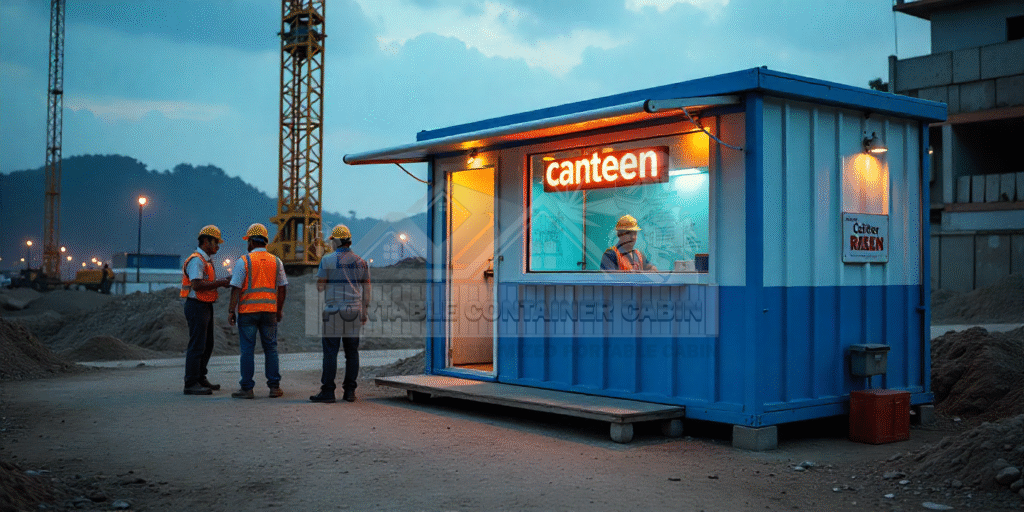
A portable canteen cabin is a prefabricated steel structure set up as a dining area, a kitchen, or both. It is made in a factory, delivered to the site, and placed on a simple level base. Inside, it can include tables and benches, a serving counter, a washing area, lights, fans and electrical points.
Because it’s built as a complete unit, it can be ready much faster than a conventional building, and it can be shifted to a new location later. For full specifications, sizes and options, see our portable canteen cabin in Mumbai page.
Step 1: Decide What Type of Canteen You Need
Before thinking about size or design, decide how food will be handled at your site. This is the decision that shapes everything else.
Dining-Only Canteen
Food is cooked elsewhere and brought in, or workers carry their own meals. The cabin only needs seating, tables, a washbasin and drinking water. This is the simplest and most common setup on construction sites.
Serving Canteen
Food is prepared off-site by a caterer and served from a counter inside the cabin. You’ll need a serving area, space for food containers, and a washing zone for utensils.
Full Kitchen and Dining Canteen
Food is cooked on-site. This needs a separate kitchen section with proper ventilation, gas or electric cooking arrangements, storage for ingredients, and more attention to fire safety. It works best for large teams or remote locations.
Step 2: Plan the Seating Capacity
Don’t plan seating for your total headcount. Instead, estimate how many people will eat at the same time.
- Find out whether lunch breaks are staggered or everyone eats together.
- Count the largest group likely to use the canteen at once.
- Allow space for walking between tables and queuing at the counter.
If one cabin isn’t enough, two or more units can be placed side by side or joined to create a bigger hall. This modular approach makes it easier to start small and add space later as your team grows.
Step 3: Plan the Layout
A well-planned layout keeps the space clean and stops it from feeling crowded. A simple flow works best:
Entry → Handwashing → Serving counter → Seating → Plate return and washing → Exit
A few practical tips:
- Keep the handwashing point near the entrance so workers wash up before eating.
- Separate the cooking or serving area from the seating area.
- Place the utensil washing zone away from where food is served.
- Leave clear walkways, especially in front of the counter.
- Keep dustbins in easy reach but away from food.
Step 4: Focus on Hygiene and Cleanliness
Hygiene is the most important part of any food space. The cabin’s design can make cleaning much easier.
- Washable surfaces: Choose wall and floor finishes that can be wiped and mopped easily.
- Proper drainage: Plan where water from washing areas will go so it doesn’t collect around the cabin.
- Clean drinking water: Provide a water purifier or a reliable source of safe drinking water.
- Waste handling: Set up separate bins for food waste and dry waste, and plan regular disposal.
- Pest control: Mesh on windows and vents, and tight-fitting doors, help keep insects and rodents out.
If food is being cooked or served on-site, check the applicable food safety and licensing requirements, such as FSSAI registration, for your type of operation.
Step 5: Plan Ventilation, Lighting and Comfort
Mumbai’s heat and humidity can make a closed space uncomfortable very quickly, especially during peak lunch hours.
- Ventilation: Windows, exhaust fans and louvers help move hot air and cooking smells out.
- Kitchen exhaust: If cooking happens inside, a proper exhaust system is essential.
- Insulation: Insulated panels help keep the cabin cooler in summer.
- Lighting: Bright, even lighting makes the space feel cleaner and safer.
- Fans or AC: Plan electrical points according to the number of fans or AC units you’ll need.
Step 6: Think About Safety
Food spaces have specific safety needs, especially when cooking is involved.
- Keep a fire extinguisher accessible, particularly near cooking areas.
- Store gas cylinders as per safety guidelines, ideally outside or in a ventilated section.
- Use good-quality wiring with proper load planning for cooking appliances.
- Make sure doors open easily and the exit isn’t blocked by furniture.
- Place the cabin on a raised base to avoid water entering during the monsoon.
Where Portable Canteen Cabins Are Commonly Used
- Construction and infrastructure project sites
- Factories and manufacturing units
- Warehouses and logistics hubs
- Schools, colleges and training centres
- Hospitals and healthcare facilities
- Labour camps and site accommodation
- Events, exhibitions and fairs
- Remote project locations without nearby food options
How Portable Canteens Keep Costs Manageable
Portable canteen cabins are often chosen because they avoid many of the costs of a permanent building. Final cost depends on size, finishes and facilities, but the savings typically come from:
- Less civil work, since only a simple base is needed
- Shorter setup time, so the canteen is usable sooner
- The option to relocate and reuse the cabin on future projects
- The flexibility to add units only when your team grows
When budgeting, think about how long you’ll use the canteen and whether it will move to other sites. That gives a clearer picture than comparing only the upfront price.
A Quick Planning Checklist
Before you speak to a manufacturer, have answers to these questions ready:
- How many people will eat at the same time?
- Will food be cooked on-site, served, or only eaten there?
- Do you need a separate kitchen, washing area or storage?
- What electrical load will you need for lights, fans, AC and appliances?
- Where will water come from, and where will wastewater go?
- How long will the canteen be used at this location?
- Will you need to relocate it later?
Clear answers make it much easier to get the right design the first time. Once you have them, an experienced portable cabin manufacturer in Mumbai can help turn them into a practical layout.
Conclusion
A good canteen doesn’t need to be a large or permanent building. With thoughtful planning around capacity, layout, hygiene, ventilation and safety, a portable canteen cabin can give workers a clean and comfortable place to eat while keeping costs and setup time under control.
If you’re planning a food space for your site, factory or facility, you can explore available options on our Portable Canteen Cabin page, or call Portable Container Cabin at 98333 60628 to discuss your requirements.
Frequently Asked Questions
1. How much space should I plan per person in a canteen?
It depends on the type of seating and how busy the space gets, but you should allow enough room for comfortable seating plus walkways and a queuing area. Your manufacturer can suggest a layout based on your expected number of diners.
2. Is it better to cook on-site or bring food from outside?
For small and medium teams, bringing food from a caterer is usually simpler and needs a smaller cabin. On-site cooking suits large teams or remote sites, but it requires a proper kitchen section, ventilation and extra safety measures.
3. Can workers also use the canteen as a rest area?
Yes. Many sites use the canteen as a break room between meal times. Comfortable seating, fans and good lighting make it more useful for this purpose.
4. How do I keep a canteen cabin clean during the monsoon?
Keep the cabin on a raised base, add a mat or covered area at the entrance, ensure drainage around the cabin, and clean floors more often to deal with mud and moisture.
5. What permissions are needed to run a canteen at a workplace?
Requirements vary by location, workforce size and whether food is cooked on-site. Food safety registration and local approvals may apply, so it’s best to check with the relevant authorities before starting operations.