Portable Container Cabin in Mumbai: Affordable, Durable & Eco-Friendly Solutions
Introduction
Space in Mumbai is expensive, and it rarely arrives when you need it. A construction company may need a site office within days of winning a project. A growing business may need extra workspace without signing a long lease. A warehouse may need a security post at a new gate. Waiting months for conventional construction often isn’t practical in these situations.
This is why more businesses are looking at a portable container cabin in Mumbai as a practical option. These cabins are built off-site, delivered ready to use, and can be moved or reused when the need changes. Below, we explain what they are, where they work well, and what to check before you buy one.
What Is a Portable Container Cabin?
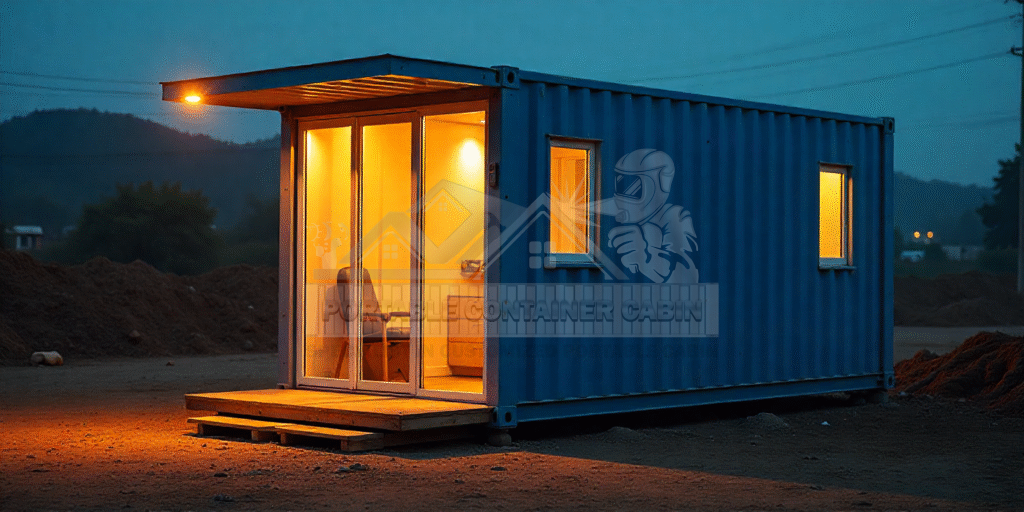
A portable container cabin is a ready-made, enclosed structure built on a steel frame. It is usually manufactured in a factory and transported to the site on a truck, then placed on a simple base or foundation.
Most cabins are made using a steel structural frame, wall and roof panels (such as PUF sandwich panels, MS sheets or ACP sheets), insulation, flooring, doors, windows and basic electrical fittings. Some are converted from shipping containers, while others are fabricated from scratch to a container-style design.
Because the structure is built as a complete unit, the same cabin can be used as an office, a storage room, a security post, a staff room or a small shop, depending on the interior layout.
Why Portable Container Cabins Are Suitable for Mumbai
Mumbai has a few conditions that make portable cabins especially practical.
Limited space. Open land is scarce, and many businesses work within tight compounds, rooftops or shared plots. A compact cabin can fit into spaces where a permanent building would be difficult to plan.
High construction costs. Land, materials and labour all cost more in a large metro. Building even a small permanent structure can become a significant expense.
Need for faster setup. Projects and businesses often run on tight timelines. Since cabins are made in a factory, work at the site is limited mainly to preparing the base, placing the unit and connecting utilities.
Commercial and industrial demand. Ports, warehouses, factories and infrastructure projects in and around Mumbai regularly need site offices, guard cabins and storage units.
Temporary or expandable needs. Many requirements change over time. A portable cabin in Mumbai can be added, moved or removed as your project or business grows.
Affordable Alternative to Traditional Construction
Portable cabins can reduce overall project costs in a few ways, though the exact difference depends on size, materials and specifications.
Shorter Construction Time
Factory fabrication happens while the site is being prepared, so less time is spent on-site. This helps when a space is needed quickly to keep work moving.
Lower Labour Requirements
Most of the work is done by the manufacturer’s team in a controlled setting. On-site labour is usually limited to installation and connections.
Reduced Material and Infrastructure Costs
A cabin generally needs a lighter foundation than a conventional building and uses fewer bricks, cement and plaster.
Lower Relocation and Modification Expenses
If you shift to a new site, a cabin can be lifted and moved instead of being demolished and rebuilt. Layout changes are also usually simpler than altering a permanent structure.
For many buyers, an affordable portable cabin is less about the lowest upfront price and more about getting usable space without long-term commitments.
Durable and Built for Regular Use
A well-made cabin can handle daily use and Mumbai’s weather for many years. Durability depends on a few key factors.
- Strong structural framework: A properly fabricated steel frame gives the cabin its strength and keeps it stable during transport and use.
- Quality panels and materials: Good-grade wall and roof panels resist dents, warping and wear.
- Weather-resistant construction: Mumbai’s heavy monsoon and coastal humidity make sealing, roof slope, and rust-resistant coatings important.
- Proper insulation: Insulated panels help keep the interior comfortable in summer heat and reduce condensation.
- Low-maintenance design: Simple finishes and accessible fittings make cleaning, repainting and repairs easier.
A durable portable cabin is the result of good materials and careful fabrication working together, so it’s worth asking manufacturers about both.
Eco-Friendly Benefits of Portable Container Cabins
-
No building is completely free of environmental impact, but portable cabins can support more responsible construction in several ways.
- Less construction waste: Factory production allows materials to be measured and cut more precisely, which reduces debris at the site.
- Reusable structures: When a project ends, the cabin can be used again elsewhere instead of being torn down.
- Relocation instead of demolition: Moving a cabin avoids the waste created by breaking down and rebuilding.
- Less reliance on conventional materials: Cabins typically use less cement, sand and brick than masonry buildings.
- Longer usable life: With regular maintenance, a cabin can serve multiple projects over many years.
These points make an eco-friendly portable cabin a sensible choice for businesses trying to reduce waste and make better use of resources.
Common Uses of Portable Container Cabins in Mumbai
Portable cabins are used across many sectors. Some of the most common applications include:
- Portable offices: A portable office cabin in Mumbai works well for small teams, sales offices and temporary branches.
- Construction site offices: A base for engineers and supervisors to manage drawings, meetings and records.
- Security cabins: Compact cabins for guards at gates, parking areas and warehouses.
- Staff rooms: Rest and changing areas for workers at sites and factories.
- Storage spaces: Lockable units for tools, equipment and materials.
- Temporary commercial spaces: Sales offices, ticket counters and event setups.
- Site accommodation: Basic living quarters for workers on longer projects.
- Portable shops: Kiosks and small retail outlets in markets or along roads.
Key Factors to Consider Before Choosing a Portable Container Cabin
Before you place an order, think through these points:
- Size and layout: Plan for the number of people, furniture and equipment, and leave room for movement.
- Material quality: Ask about the steel grade, panel type and panel thickness.
- Insulation: Insulation matters for comfort, especially for cabins used all day.
- Ventilation: Windows, exhaust fans or louvers help with airflow and reduce humidity.
- Electrical requirements: Decide on lights, fans, sockets and AC points in advance so wiring is planned properly.
- Mobility and relocation: If you expect to move the cabin, confirm it has lifting points and a suitable size for transport.
- Maintenance: Ask what upkeep is needed, such as repainting or resealing.
- Customization options: Check whether you can choose partitions, washrooms, flooring and finishes.
- Manufacturer experience: An experienced maker is more likely to deliver consistent quality.
Portable Container Cabin vs Traditional Construction
Both options have a place. The right choice depends on how long you need the space and how you plan to use it.
| Factor | Portable Container Cabin | Traditional Construction |
|---|---|---|
| Installation time | Usually quick, as most work is done off-site | Longer, with on-site work from foundation to finishing |
| Flexibility | Can be expanded, moved or repurposed | Fixed once built |
| Cost considerations | Lower upfront cost in many cases; depends on specifications | Higher upfront cost, but suitable for permanent, large buildings |
| Relocation | Can be shifted to a new site | Not possible |
| Construction waste | Generally lower | Generally higher |
| Customization | Good within the cabin’s size and structure | Highly flexible in design and scale |
| Long-term usability | Long life with proper maintenance | Typically longer life for permanent use |
If you need a large, permanent, multi-storey building, conventional construction may still be the better option. For temporary, flexible or quick-to-set-up spaces, a portable cabin is often more practical.
Choosing a Portable Cabin Manufacturer in Mumbai
The quality of your cabin depends heavily on who builds it. When comparing options for a Portable Cabin Manufacturer in Mumbai, check the following:
- Product quality: Visit the factory or an installed cabin if possible, and look at welding, finishing and fittings.
- Customization options: The manufacturer should be able to adapt size, layout and interiors to your needs.
- Material specifications: Ask for clear details on frame, panels, insulation and flooring in the quotation.
- Manufacturing capability: Confirm they can deliver your order size within your timeline.
- Previous projects: Photos, client references or site visits help you judge their work.
- Delivery and installation support: Find out whether transport, crane handling and installation are included.
- After-sales service: Ask about warranty terms and support for repairs or modifications.
You can learn more about cabin types and customization on our portable cabin manufacturer in Mumbai page.
Why Choose a Portable Container Cabin for Your Mumbai Project?
To sum up, a portable container cabin gives you:
- Usable space within a shorter timeframe
- Lower setup costs compared with many permanent structures
- The freedom to relocate, expand or reuse the cabin
- Reliable performance when built with good materials
- Less construction waste and better reuse of resources
For businesses that need practical space without a long construction process, this combination is hard to ignore.
Conclusion
Mumbai’s space and cost challenges aren’t going away, and many businesses need workspace that can keep up with changing plans. A portable container cabin offers a practical balance of affordability, durability, flexibility and sustainability. It won’t replace every permanent building, but for site offices, security posts, storage, staff rooms and temporary commercial spaces, it’s often the more sensible choice.
If you’re planning a project and want to explore your options, visit Portable Container Cabin to see available designs and discuss your requirements.
Frequently Asked Questions
1. How long does it take to get a portable container cabin in Mumbai?
Timelines depend on size, design and order volume. Standard cabins are usually ready faster than customized ones. Your manufacturer can give a clear delivery schedule after finalizing the design.
2. Can a portable container cabin handle Mumbai’s monsoon?
Yes, if it is built with proper sealing, a sloped roof, rust-resistant coatings and quality panels. Placing it on a raised base also helps prevent water entry.
3. Do I need a permanent foundation for a portable cabin?
Usually not. Most cabins sit on a level concrete base, plinth or blocks. The exact requirement depends on cabin size and site conditions.
4. Can a portable cabin be relocated to another site?
Yes. Cabins can be lifted with a crane and transported by truck. Confirm with the manufacturer that the cabin’s size and lifting arrangement suit relocation.
5. Can I customize the interior of a container cabin?
Most manufacturers offer options such as partitions, washrooms, AC points, flooring, false ceilings and window placement. Share your requirements early so they can be included in the design.